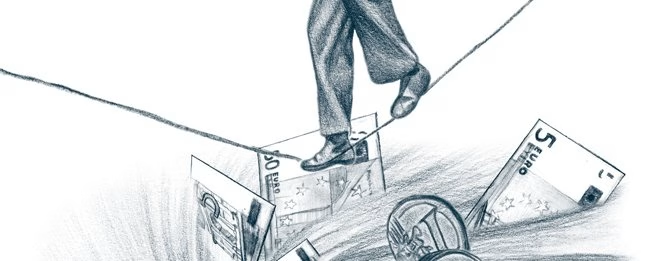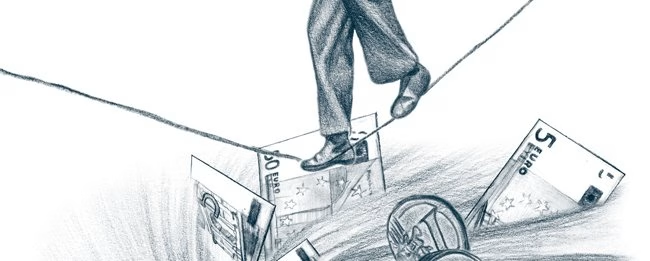
After ten seemingly successful years, the project of European economic and monetary union has encountered its first existential crisis. One country has flouted the block’s stability rules, and teeters on the brink of bankruptcy, several others carry so much contingent debt – in the form of bank guarantees – that their future position in the eurozone must be regarded as doubtful. For the first time in the history of the project, a serious discussion has erupted about the future of the euro and the political implications of monetary union. This essay will attempt to disentangle the debate. The first part deals with the historical roots of the present crisis; the second provides a detailed analysis of the crisis itself, and the third points to ways out of the crisis; a final section concludes.
1. The Prodi Moment – a brief history of the European debt crisis
The euro’s sovereign debt crisis did not arrive out of the blue. It is an integral part of the global financial crisis that erupted in August 2007, and like that crisis it has deep and complex historical roots, some of which go back several decades. They include the rise of global and intra-eurozone imbalances, the rise of financial innovation, and architectural flaws in the governance structure of monetary union.
It is today commonplace to depict Germany as the reluctant giant of the eurozone, but in the early stages, Germany was one of the drivers of the project. Two successive German chancellors, Helmut Schmidt (1974-1982) and Helmut Kohl (1982-1998) were among the most outspoken proponents of the project. Schmidt saw the euro predominantly in terms of global macroeconomics, while Kohl was driven by a need to anchor an enlarged Germany in the European Union. But below this bird’s eye perspective of those two leaders, another debate took place, more relevant to the crisis today, which centred on the question: Does the euro require a political union to survive in the long run?
The official answer, as outlined by the Maastricht Treaty, was ambiguous. The treaty promised ever closer union, but included the framework of a rules-based monetary union with an almost complete lack of political infrastructure – apart from a central bank, and a set of rules to set out conditions for membership, and to constrain behaviour once a country has become a member.
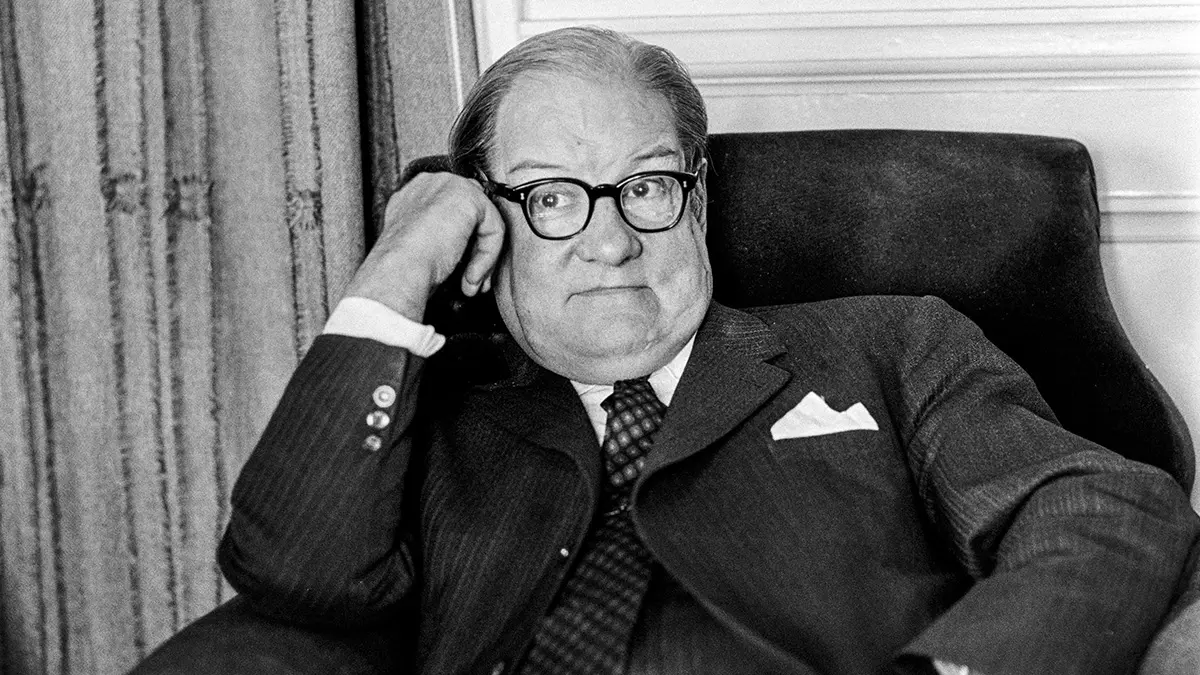
The crisis has brought back this unanswered question with renewed force. During the 1980s, the German economic establishment’s view was that of a Krönungstheorie, the notion that a single currency would constitute the final step on the road to political union – a step certainly beyond a single market, a single foreign policy, an EU-wide police, and EU wide army. The notion was that a monetary union is ultimately a deep political commitment that requires joint economic policy decisions, which in turn necessitate some federal structures of political decision making. Romano Prodi, a former president of the European Commission, also agreed with this view, though added an important nuance.
It was only necessary for a political union to be established eventually, not at the beginning of the project. The political union would be brought about by crises. Each time the euro has a crisis, the political leaders would meet and create new political structure to ensure its survival. ”I am sure the euro will oblige us to introduce a new set of economic policy instruments. It is politically impossible to propose that now. But some day there will be a crisis and new instruments will be created.”1
The seeming success of the euro during its first decade seemed to prove Prodi’s first assertion. A political union was needed to create a monetary union. But what about the second? Will our present crisis lead to new instruments? And will it lead us on the road to political union?
Prodi also made another much quoted comment on another occasion: ”I know very well that the Stability Pact is stupid, like all decisions which are rigid.”2 The two Prodi comments highlight very clearly the fault lines in this debate – it is whether the euro will ultimately require, and lead to, political union, or whether it can survive forever as a rules-based monetary union without political union.
As the Krönungstheorie no longer constituted a viable position in the late 1980s, the German economics establishment, as represented by the Deutsche Bundesbank, rallied behind a new idea of a rules-based monetary union. In 1999, Otmar Issing3, the first chief economist of the European Central Bank, delivered a speech, in which he said that the EU was not ready for political union, but that it was possible after all to create a monetary union, based on a set of clear principles and rules.
Those rules were agreed in December 1990, in the Maastricht Treaty, and extended by the stability and growth pact, agreed at the Dublin European Council six years later. The Maastricht Treaty produced the ground rules, providing ceilings on deficits and gross debt, as a percentage of gross domestic product, and maximum deviation rules for short-terms interest rates and inflation. The stability pact added one important new rule – that euro members should run balanced budgets over the cycle – and laid a complex set of procedures to enforce the existing rules.
Whenever you establish a rules-based system, two questions immediately arise. Are these rules both necessary and sufficient? And can they be enforced? Back in 1999, the German establishment believed that the answered to both questions is yes. Romano Prodi believed that the answer to the first question, is No. As far as the second question is concerned, the answer has become clear over the years. It turned out to be impossible to enforce the rules against Germany and France in 2003, when they broke the deficit rules. And so it became impossible to enforce them against Greece, which flouted the rules in a every single year of its membership of the euro.
As with any system of rules, they deal with the set of circumstances the inventors of the rules consider most pressing at the time, and which are rooted in their own personal experience. Rules-based systems are rarely forward looking. In this case, the preoccupation of the policy elites at the time were inflation – rooted in the experience of moderately high inflation rates in the 1970s and early 1980s – and fiscal discipline.
But the first decade of the euro brought about a new set of challenges that were not captured by those rules, the rise of global imbalances, which had its mirror-image inside the eurozone itself. Germany ran persistent trade surpluses, culiminating in a current account surplus of 8 per cent of GDP in 2008, while Spain’s current account deficit reached 10 per cent that year. For Spain, the immediate effect of eurozone membership was a sharp drop in short-term interest rates, which triggered a housing bubble during which real house prices rose threefold.
These imbalances also increased intra-eurozone financial flows, as Germany’s excess savings had to be channelled abroad. Part of the excess savings went into the US subprime market. But another part went into the purchase of Greek and Spanish sovereign bonds. During the euro’s first ten years, the financial markets began to treat the eurozone as a single economy, as bond yields converged almost perfectly. The only technical difference between a German and a Greek 10-year government bond is default risk, and if you consider that risk to be irrelevant, you would attach the same price to both securities.
The crisis thus had two interlinked components. A southern European sovereign debt crisis, and a northern European banking crisis. A default of Greece, for example, would have landed several French and German banks in deep trouble.
When the eurozone debt crisis erupted in the winter of 2009/2010, governments were additionally constrained by the No Bailout rule, which is now enshrined in Article 125 of the Treaty of the Functioning of the European Union (TFEU). This rule explicitly forbids governments and the EU to take on debts of other member states. The Treaty also lacks any provisions for a default of a member states, or an orderly exit from the eurozone. Article 50 of the Treaty on European Union (TEU) includes a provision for a member states to negotiate an exit from the EU itself – which would automatically imply an exit from the euro, as only EU member states can be members of the euro. But other than this, the euro is essentially a one-way road. You can get in, but not out.
And this pitches three internally inconsistent goals against one another: no default, no exit, and no bailout. The crisis is essentially about the inconsistency of these rules. Resolving this inconsistency would either lead us in the direction of a political union – if the EU were to relax the bailout criterion – or in the direction of a split-up – if the EU were to relax the exit criterion. The EU is certainly not ready to relax the No Default condition, as this might give rise to speculative attacks on the weaker member states. In other words, the crisis is confronting the EU with a straight choice of political integration or disintegration. In other words, we have reached the Prodi Moment of the crisis.
2. The nature of the European crisis
To understand the nature of this crisis, we have to treat the cases of Greece and Spain separately. They are very different types of crisis. Greece is a classic sovereign insolvency story. The Spanish crisis is rooted in the private sector.
i. Greece: Farce, not tragedy
Greece entered the eurozone in 2001 under a Socialist government, then headed by prime minister Costas Simitis. After the victory of the conservative New Democracy in March 2004, under prime minister Kostas Karamanlis, the budget deficit for 2003 got revised. Before the elections, Greece reported a 2003 deficit of €2.6 billion, or 1.7% of GDP, well below the euro-zone average of 2.7%. In May 2004, the deficit was revised to 3.2%. In September, it was up to 4.6%, because the previous government had failed to include some military expenses, and overestimated some revenue streams; a further revision in March 2005 had the 2003 deficit at 5.2%, which was revised upwards again to 5.7%.
And it all happened again in 2009. What was originally projected to be a 3.3% deficit for 2009, turned into a 12.7% deficit immediately after the 2009 election, which were won by the Socialists. This number, too, was subsequently revised upwards to 13.6%.
These events triggered the European crisis, and culminated in an agreement with the European Union and the International Monetary Fund on a multi-annual adjustment programme, flanked by a €110bn standby facility from the eurozone – which later turned into the €440bn European Financial Stability Facility (EFSF) to stabilise not only the Greek bond markets, but the rest of the eurozone as well.
By then we have reached a situation, where the solvency of the country was seriously threatened. It is worth going through some of the numbers to make a rough estimate about future debt sustainability.
In 2009, the Greek primary deficit (before interest payments) was 7.9%. On the assumption of 2% nominal growth during the adjustment period, a marginal interest rate of 6% on future debt, the primary balance Greece needs to achieve debt sustainability is a surplus of almost 5%. The total size of the adjustment is thus a whopping 13 percentage points. The only advanced economies in modern times ever to achieve such a shift were Denmark, Sweden and Finland during the 1980s and 1990s. But they, at least in part, benefited from the ability to devalue their currencies, and from a global environment, which produced robust economic growth.
The Greek general government had total expenditures of 44% of GDP in 2008, and tax revenues of 41% of GDP. If the 13% adjustment effort were to come entirely from expenditures, this would imply a cut in public spending of 30% of GDP. Conversely, if all the adjustment were to come from taxes, it would require a tax hike of a similar scale. Given the degree of corruption and the inadequacy of the Greek tax collection system, there is no way that taxation could take the lionshare of this adjustment.
These numbers are future projections, and thus liable to errors. The interest rate Greece would have to pay may be a little under 6%, but probably not much. Maybe, for reasons unknown in 2010, the reform process produces such high rates of economic growth that the adjustment is self-sustainable. The IMF calculated that the debt levels will stabilise at just under 150% of GDP. To get down to a level of 60% of GDP, the reference criterion under the Maastricht Treaty, would require an implausible increase in potential growth – at a time when it is not clear whether the world economy can sustain the growth rates of the previous decade.
A factor that aggravated the situation in Greece was a loss of competitiveness during that period. Greek competitiveness fell by 15 to 30% against the eurozone average during the last decade – depending on which measure is used. The current account deficit was 11.2% of GDP, a clearly unsustainable position, even inside a highly integrated monetary union.
Apart from a fiscal retrenchment, Greece would also need to take measures to restore competitiveness, i.e. reduce wages. But it must do so by avoiding a depression, which in turn would endanger the adjustment programme, as tax revenues would collapse. It is not impossible that Greece can succeed, but based on what we know in 2010, it did not seem plausible, even under the assumption that Greece would stick to the agreed programme word for word.
Greece was thus faced with the following universe of options:
1. Leave the eurozone;
2. Default inside the eurozone, or negotiate a restructuring of the debt;
3. No default, reforms, internal devaluation, fiscal retrenchment
There is no guarantee that option three can physically work. If the nominal rate of growth were to decline to 0 per cent over the entire adjustment period, the primary surplus necessary for debt sustainability would jump to over 7 per cent. Such a surplus is extremely hard, perhaps impossible to achieve, during a recession. This shows how important it is to avoid a self-sustaining slump. The consolidation under option three would get progressively harder, and the danger of an Argentinian-style vicious circle is immense.
The problem is that Greece will not just have to make an improbable fiscal adjustment, but it will also have to seek a fall in prices and wages. These two goals may well be inconsistent. And this is why the Greek bond spread to Germany rose from almost zero to over 10 per cent (it briefly peaked at over 20%). A 10% spread is roughly consistent with a 30% probability of a 30% loss under a risk-neutral setting. In view of the economic analysis of the situation, that would seem to be an entirely appropriate rating for a ten-year bond, even under the presence of a protective shield from the EU – which is set up only to last for three years.
Greece has no interest to default, or restructure, straight away. The country has been taken off the international capital markets for the duration of the adjustment programme. The danger arrives once the adjustment produces the first primary surplus. This is the moment, when a country is no longer dependent on the capital markets to finance public expenditure.
But given the large internal imbalances in the eurozone, a default would have serious implications for the Northern European banks. They are, essentially, the counterparty to the large Greece current account deficit. This is an estimate of the exposure in May 2010:
French banks: € 55 billion (Société Générale, Crédit Agricole)
Swiss banks: € 47 billion
Greek banks: € 40 billion (14% share of the total volume)
German banks: € 30 billion (Deutsche Bank, Commerzbank, Hypo Real Estate)
Source: Barclays Capital
Altogether, European banks have invested more than €240bn in Greek sovereign debt, and approximately 10% of all sovereign bonds in the euro area are Greek.
This is the reason why it was impossible for the German government to accept the advice of countless German professors, who advocated a Greek default, or a Greek exit from the eurozone. Both recommendations would have triggered another European banking crisis, which would have cost the governments a lot more than the bailout for Greece. A bank recapitalisation would have had to be met out of current expenditure, while the EFSF is essentially a special purpose vehicle that borrows on the capital markets. So far – June 2010 – the rescue of Greece has not cost the European taxpayer a penny – thanks to the instruments of modern finance, which let its users bask in a false sense of security, as contingent debt piles up. The bill comes if, or rather when, Greece defaults.
ii. Spain: the true tragedy
The Spanish story could not be more different. Spain has studiously followed all the rules. Until the recession, the country used to run a budget surplus. The debt-to-GDP ratio was around 40 per cent, well below those of Germany and France. What the rules did not foresee, was that the advent of monetary union produced a mighty housing bubble, which in turn created a private-sector debt problem. Those debts landed in the banking sector, which is indirectly guaranteed by the Spanish government. The debt problem of Spain is thus a contingent debt problem.
During the last decade, the construction sector grew to almost 20% of GDP – an extremely unsustainable position. Just for comparison, it grew to only 15% of GDP in Germany after unification. Once the construction bubble burst, it took more than 10 years to make the adjustment. A normal level is well under 10%, so this adjustment alone will shrink Spanish GDP by a double digit percentage amount. To achieve zero economic growth, other sectors of the Spanish economy will need to grow by improbable amounts.
Like Greece and Portugal, Spain has a competitiveness problem. Depending on which measure on uses, Spain needs a real devaluation of 20 to 30%, which in turn would require falling wages or prices – or at least stagnating wages and prices on the assumption than Northern European wages and price continue to rise by moderate amounts.
One measure of the loss of competitiveness is the current account, which reached a deficit of 10% in 2008. This deficit reflected an even stronger private sector financial deficit (as the government sector was in surplus). The debt of the Spanish private sector ended up, either directly or indirectly via Spanish banks, in the eurozone banking sector. According to data from the Bank for International Settlements4 German banks had exposures to Spain in the order of €170bn, while French banks had exposures of €210bn.
Because of the post-Lehman bank guarantees, the debt of the Spanish banking sector are ultimately debts of the Spanish state, as a result of which investors treated the risk of the Spanish banking system as a contingent debt problem of the Spanish government. This is why Spanish spreads have been rising, despite the fact that the Spanish fiscal position has remained sound.
As with Greece, Spain would require very strong growth rates to make the adjustment – which would logically have to consist of shifting economic resources from the construction sector to the industrial sector. But that in turn would require a significant improvement in competitiveness, which in turn is likely to have severely negative implications on economic growth. That in turn is likely to exacerbate the private sector’s contingent debt problem. Spanish households and banks are facing the prospect of debt-deflation, as the real values of their debt is likely to raise for as long as the adjustment takes place.
The Spanish government responded with the imposition of labour market reforms in June 2010 – which, at the time of writing, had yet to be approved by the Spanish parliament – while the central bank has forced mergers among the country’s savings banks, which hold most of the mortgage debt, and toughened the accounting rules. While the reforms are a step in the right direction, it is hard to see how a reduction in dismissals costs – from 45 to 30 days per year worked – are going to produce a macroeconomic miracle. These costs are still the highest in Europe. Their short-term effect is surely to increase unemployment, as it makes it cheaper for companies to fire staff.
The country is thus very likely to face a prolonged slump. The uncertainty that arises from this prospect is how the political system will react to this. Will it accept the adjustment, or will political forces arise that advocate default – either inside or outside the eurozone. And when the recession enters its later stages, will Spaniards not begin to start blaming the euro or other European countries for their problems? The answer to these questions will greatly determine the success or failure of the eurozone.
3. Ways out of the crisis
As the crises of Greece and Spain are totally different in nature – despite some overt similarities – any successful policy response would need to be specifically tailored to the situation. In the case of Greece, the eurozone encountered a classical fiscal crisis, the type of crisis that was foreseen, but not supposed to happen. In the case of Spain, the eurozone encountered a crisis that was not foreseen.
There is already agreement among EU policy makers that any policy response needs to encompass two components: crisis resolution to address the existing crises, and governance reform to prevent a re-run in the future.
The EU’s answer to the former is the EFSF, but this is at present only a bailout fund. It could develop into a permanent political institution of the EU, but that might require a complicated change in the European Treaties, which member states are currently keen to avoid. For any such system to work in the long run, it would also require some orderly default mechanism, for otherwise it would flout the No Bailout rule.
Such a fund cannot address the problem of Spain. It is hard to conceive of anything that could spare Spain a long adjustment recession. Such adjustments are expected to arise in a monetary union from time to time, and it is important that the eurozone also considers some stabilising mechanism.
There in principle two possibilities of such a mechanism: Fiscal transfers or a fiscal union. While the latter would be more ambitious, it might actually be politically easier to implement than the first. The problem with fiscal transfers – which have not yet occurred – is that they are impossible to sell to electorates. One could only imagine the reaction in Germany or Austria in 2013, when asked to accept a tax increase to save Greece from defaulting. By then, it might no longer be possible to hide bad debt in the EFSF and the ECB without realising the losses.
A fiscal union, by contrast, avoids the problem of bilateral transfers – and it acts as an automatic stabiliser. Given the setting here, there is no question of a full-blown political union, the creation of a European state, with some 30% of GDP, or more, managed at that level. But there is a possibility of what I would call a minimally sufficient fiscal union, compromising of a small number of select areas – for example short-term unemployment insurance and defence procure. This might constitute some 5-7% of GDP, and would stabilise the eurozone on a cross-regional basis. If southern Spain is hit with a depression, a large portion of the unemployment fund would be channelled to that region. Conversely, if Schleswig-Holstein is in recession, it would also benefit from such a scheme. The idea is not to produce another structural adjustment fund, with financial flows from rich to poor countries, but a macroeconomic stabilisation fund.
Given the reluctance to change the treaties, there is no chance that any such scheme could be ready in time to save Spain or Greece from a long and depression. And this means that the EU has at present no policies to address the issue beyond spanning a protective umbrella to guarantee continued access to finance at interest rates that appear cheap – at around 5% – but which are not all that cheap for countries with no growth. And even then, this can logically only solve a liquidity problem, not a solvency problem.
In a situation as severe as this, one would expect that all efforts are directed towards the resolution of the solvency problem, rather than dealing with discussions about future architecture. And even these discussions are heading in a problematic direction, focusing entirely on a reform of the stability pact. A simple reform of the stability pact to harden the rules and the supervisory procedures, as currently proposed by various European institutions, would address a Greek-style problem, but not a Spanish-style problem.
And it is not even clear whether yet another stability and growth pact with harder rules and sanctions, as proposed by Germany and others, will work. The sanctions-based approached failed in 2003, when Germany and France joined together to undermine the system, and forced a softening of the pact in 2005. If the EU were to revert to the original pact, we will have gone full circle. Surely, if sanctions do not work, lots of sanctions do not work either.
As to the second crisis category – that of private sector imbalances – a solution would be more complicated, and potentially more far reaching. In the concrete case of Spain, part of the problem was the system of a system of short-term housing finance that contributed to the property bubble. Another aspect concerned the heavily regulated labour market that led to an excessive rise in wages, beyond productivity gains. But the problem of imbalances goes much deeper.
Countries with large current account surpluses, especially Germany, have their own pathologies. The German tax system is friendly for manufacturers, but hostile to service providers and consumers. The regulatory system, especially in the labour market, is extremely hostile to labour-intensive service providers. In Germany, the labour market is flexible only inasmuch as manufacturing wages respond well to changes in productivity and competitiveness. Otherwise, the labour market remains inflexible, with strict dismissal laws and extremely bureaucratic procedures for worker representation. None of these pose big problems for manufacturing companies. But they do for firm that offer labour-intensive services.
To solve the problem of the eurozone’s internal imbalances would require a degree of policy coordination that goes much beyond the procedures and EU programmes currently in place, such as the single market programme. It would require a significant degree of harmonisation in the labour market, not of wages, but of rules and procedures. Most importantly, it would require a process that is binding on member states.
Ahead of the June meeting of the European Council, the European Commission made such a proposal – which would have set up a co-ordination committee with a legal status to enforce policy recommendations – but this was rejected by the Council. Europe’s political leadership continues to define the crisis purely in terms of fiscal indiscipline, not in terms of economic imbalances, and this is the issue on which most of the debate in the Council takes place.
So both in terms of crisis resolution and governance reform the political emphasis is one-sided. The EU’s political establishment is addressing a solvency problem through policies to inject liquidity, and it is addressing a problem of imbalances by focusing only on imbalances that arise in the public sector, i.e. budget deficits. As a result, they are neither solving the problem, nor are they are likely to prevent a re-run of a similar problem in the future.
4. Conclusion
One of the historical lesson monetary unions is that they either fail, or end up in political unions. This crisis has shown us in some detail why this should be so. The reason is that unforeseen events happen that fall outside the monetary union’s set of rules, and that require political action at the centre. A problem of fiscal indiscipline could conceivably be solved in a decentralised rules-based system, but dealing with solvency issues, or private sector imbalances requires joint political action at the centre. It would require a form of economic governance.
While Germany reluctantly accepted the euro, Germany does not accept a governance system that goes beyond the present rules-based approach. Germany fears that its interests would not be properly represented in a system of joint economic governance. This was also the stated reason why Germany rejected a European solution to the banking crisis in 2008 – something that could have provided a potent macroeconomic stabiliser during the crisis of 2010. The fear was that the EU would not treat the German Landesbanken with the same understanding as the German government. In other words, Germany fears to be outvoted by a majority of countries with different interests.
In the past, it was safe to predict that the EU, when faced with an impasse, would simple muddle through. But you cannot muddle through a solvency problem, or through a problem of imbalances. The eurozone is not different from other monetary unions in that it, too, requires a political superstructure. My own proposal for a minimally sufficient fiscal union to act as an automatic shock absorber would provide such a superstructure. But it is far from clear whether the eurozone could ever agree on such a system even when the Prodi Moment arrives.
1Romano Prodi, EU Commission President. Financial Times, 4 December 2001
2 Romano Prodi, EU Commission President. Interview with le Monde, 17 Oct 2002.
3Otmar Issing Member of the Executive Board of the European Central Bank, ’FAZ lecture’ delivered on 20 September 1999 in German in Frankfurt, on the occasion of the 50th Anniversary of Frankfurter Allgemeine Zeitung
4Quarterly Review, June 2010, www.bis.org