History has taught us that it takes at least a generation before it is possible to determine how well an artist or a writer will manage to stand the test of time.
To be on the really safe side one should, according to some, even wait a full century before trying to speak with certainty about what kind of culture has the necessary qualities to survive, and which pictorial art, literary and musical works will just become a concern for archivists and museum magazines.
We also know that even several hundred years after, revaluations are made. Shakespeare’s differing fortunes before and after romanticism are examples. Another is the planet’s most famous painting: Leonardo’s Mona Lisa. It was virtually unknown when it was rediscovered by the symbolists at the end of the 1800s (and was not really known until after the theft from the Louvre in 1911). Similarly, one could, in the middle of the 1800s, pay more for a painting by Marcus Larsson than for one by Caravaggio. Today, Larsson’s paintings cost less than SEK 100,000 Swedish kronor, while the works of Caravaggio are valued at nearly one billion.
Given this kind of fluctuation, it may seem odd that art is perceived as a relatively safe investment. Even weirder is that this even applies to contemporary art.
In order to ensure the value of art, however, the art world has now had surgery to remove the two factors that are behind most of the changes in cultural markets: the public’s and art critics’ judgements. After all, it is the fact that people today recognise themselves more in Shakespeare than in Tor Hedberg dramas that confirms it is the former that has survived; likewise that we perceive Zorn’s human interpretations and artistic virtuosity as more impressive than Mårten Eskil Winge or Esaias Thorén.
In contemporary art theory, however, it has been settled that artistic value should, once and for all, be decided in consultation between investors, gallery owners and museum- and art institution managers. Since these are symbiotically interdependent, one can assume that the value can in this way be generated and maintained in a much more stable manner than before. This is also facilitated by the fact that the value is now not linked to the immanent qualities of the artwork. In today’s art world, one has no future if one does not accept that one of two identical objects can be worthless, while the other can be worth many millions.
In a not entirely unproblematic way, these conditions were manifested in the Modern Museum’s planned autumn exhibition Ynglingagatan 1, which is based on Stockholm’s galleries’ exhibitions of the 1990s. Without knowing the extent to which the curators intend to problematise what such an business always involves by considerations of the related career opportunities and commercial aspirations, one can nevertheless state that from the museum’s side it is no secret how significant is the axis of artist-investor-gallery-museum.
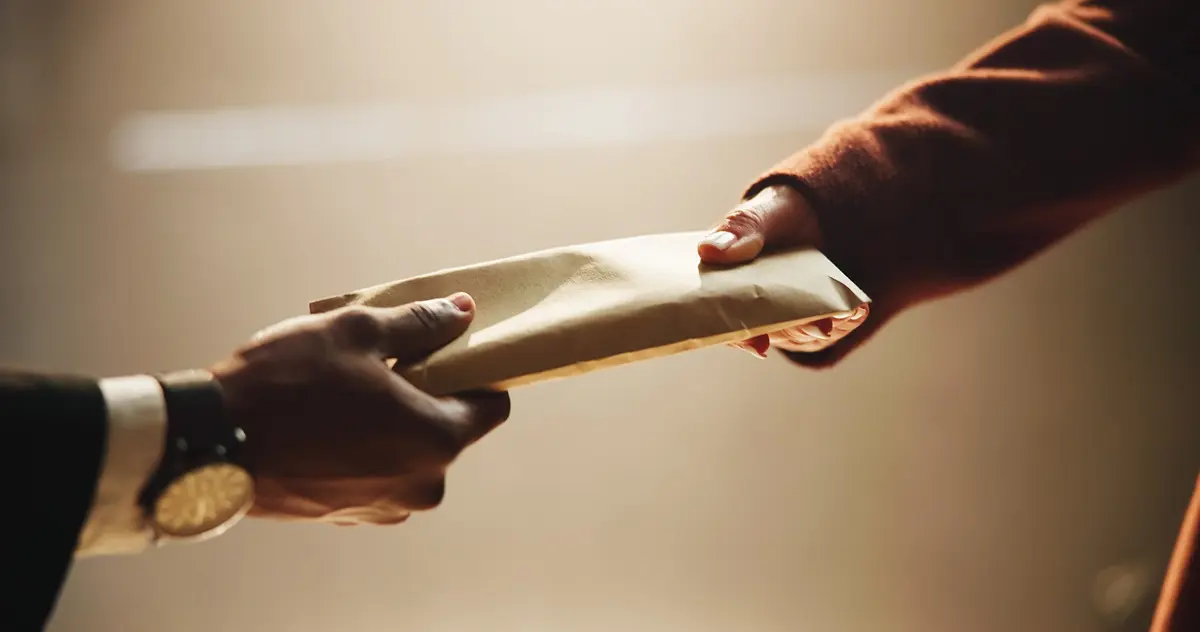
Galleries will receive status by acting in symbiosis with museums. This symbiosis is a guarantee that the well-heeled customers, which the gallery hopes to attract, feel confident to make good investments. While the museum is dependent on the investors: they can, in order to add value to their own collections, deposit works in the museum – and in other ways make the museum dependent on their financial benevolence. In exchange, the museum’s leadership willingly sets up juries for the investors’ scholarships and awards, which gives the artists in whom they have invested an even greater status (and value).
It also justifies the museum organising exhibitions with the award-winning artists. Which means that the gallery owners, who get their prestige by working with the museum, can raise their prices further. Which further increases the value of investors’ art, whose price therefore can be pushed up by the investors bidding on these artists’ work when they appear at auction. And so on.
This has created an entirely and thoroughly self-sufficient ecosystem, in which art critics can only get access to the ‘honey pots’ by playing along and denouncing any critic of this efficient profit machine as reactionary right-wing populists and Nazis. This makes it a perfect pyramid scheme, where everyone seems to be a winner (and which, unlike the trading of stocks, never needs to be connected to a real basis of value) and almost beyond the reach of serious criticism.
Which, of course, does not change the fact that even this profit maximisation spiral – like all bubble economies – can never go on for long.
If the danger of letting the economy and profit-maximisation dictate cultural life and theories around culture – the theme in this issue of Axess – where the publishing industry, the museum sector, and the art world are discussed on the basis of how qualified discussion, analysis and aesthetic qualities can be the exceptions in a time of growing commercialisation.

Redan prenumerant?
Logga inUpptäck Axess Digital i 3 månader utan kostnad
Allt innehåll. Alltid nära till hands.
- Full tillgång till allt innehåll på axess.se.
- Tillgång till vårt magasinarkiv
- Nyhetsbrev direkt till din inbox